
The Pre-Production Process Explained

- Step 1: Scripting
- Step 2: Legal & Budgets
- Step 3: Creative planning
- Step 4: Logistics
- Pre-production for agency and brand video
Pre-production is the planning phase before filming starts. You lock the script, set the budget and schedule, hire the crew and cast, and plan every shot with a storyboard and shot list, so the shoot follows a plan everyone has agreed. It applies to a feature film, a TV series, an animation, an ad or a brand film.
Preparing for a shoot is daunting, particularly if you didn't go to film school. The simplest way through it is to break the work into chunks, which is what this guide does.
What is pre-production?
Pre-production is the creative and logistical process of planning everything needed to produce a feature film, TV show, video or any other creative project. It's the first of three phases:
| Phase | What happens | It ends when |
|---|---|---|
| Pre-production | Script, budget, schedule, crew and cast, storyboard, shot list, locations | The plan is locked and the call sheets are out |
| Production | The shoot, or the animation itself | The last shot is filmed or animated |
| Post-production | Editing, sound, music, color and visual effects | The final video is delivered |
Using pre-production software can help you keep the scripts, boards and feedback from this phase in one place.
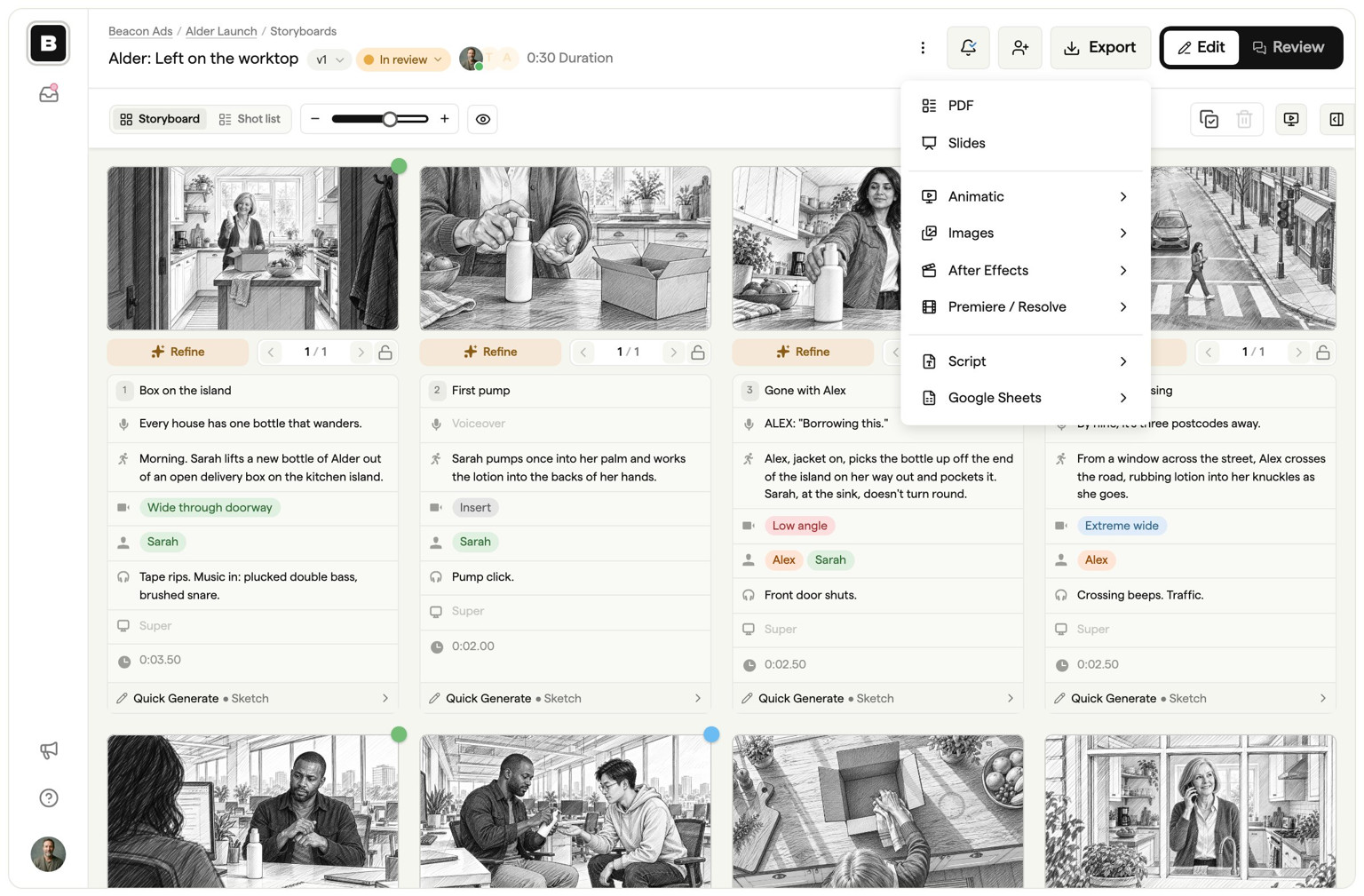
Storyboard software for video agencies & brand teams
One workspace for storyboards, animatics, comments, and approvals. Spend time on the creative, not the back-and-forth.
4 steps in the pre-production process
- Scripting: Write your script and create a script breakdown.
- Legal and budgets: Take care of the business side of production and hire your crew.
- Creative planning: Work with your department heads to plan out everything needed to make your project work. Storyboard and make a shot list.
- Logistics: Revise your shooting schedule and budget. Work with your location scout, book gear, hire talent, and start rehearsing.
Read on for each step in detail. Making an animation? The order shifts, with the animatic and design work before any logistics. Follow the pre-production checklist for animated video instead. Making an ad, explainer or brand film for a client? The same steps apply, but a client sign-off sits in the middle. Jump to pre-production for agency and brand video.
Scripting
1. Write the script
The first step in successful film production is getting your script ready. Not sure how to tackle the screenwriting process? We've got you covered with our handy guide: How to write a script.
Making an ad, explainer or brand film for a client? Agree a creative brief first, then write from a video script template. For a documentary, the documentary treatment comes before the script.
2. Create a script breakdown
Now that your script's sorted, it's time to dive into the meat of the pre-production process. Go through the entire script and pick out everything that's seen or heard in the film: locations, characters, costumes, sound effects, props, visual effects and extras.
Get every last item. Anything you miss here will be missing from your list of things to prepare for the shoot or post-production.
Legal & Budgets
3. Form a company
Every production is basically a business. So before you start putting out casting calls, you need to decide what kind of business you are. Some people produce the film with an existing production company. Other people create a new corporate identity for the production.
Once you've sorted out your business entity, you can do all the important stuff: open a bank account, deposit production funds, and start building your production team. Maybe make some business cards if you're feeling fancy.
4. Make a budget
It's time to work out how much money you're going to spend on this thing, and that's where your script breakdown comes in handy. You'll use it to create three different budgets:
-
Dream budget Imagine money's no object. Who would you cast as your lead? Who'd be in your film crew? Where would you shoot the film? Figure out how much it would cost for all your perfect locations, characters, props, and everything else in your script breakdown. Then write that figure down.
-
Restrained budget Do the same thing but rein it in a bit. Maybe pick Vinnie Jones as your lead rather than Dwayne Johnson. Shoot in Bradford rather than Barbados. Ditch the scene with the helicopter. Write that figure down.
-
Shoestring budget Finally, think about the cheapest way you could achieve your filmmaking goals. Casting your mates. Shooting it in your grandparents' garage. Borrowing your mum's car for the high-speed chase. This figure should be a bit smaller.
5. Create a production schedule
If you've got the resources, you might want to bring a line producer on board to prepare a preliminary production schedule. It's mostly dictated by your shooting schedule, so you'll need to go through your shooting script to figure out how many scenes you can shoot each day. Most productions try to shoot five pages a day, which is about five minutes of screen time.
6. Assemble a crew
Now that you've got a rough budget and schedule together, you're in a good position to put together a film crew. For starters, you'll probably want to lock in your director, assistant director, and production manager.
Then you'll need to secure your department heads. Depending on the size and budget of your production, your list will include some of the following:
- casting director
- cinematographer
- costume designer
- director of photography
- editor
- gaffer
- production coordinator
- production designer
- production sound mixer
- art director
- lead makeup artist
You can start taking some work off your plate by delegating to the relevant people. Let your director know that they can start making creative decisions with department heads. And make sure your production manager has access to the bank account so that you don't have to sign everything off.
Creative planning
7. Start creative planning
Once you've recruited your department heads, your director will start the creative planning. The goal of this stage is for the departments to figure out what they'll need to fulfil the director's vision. They'll meet regularly and tell the line producer what they need so the budget can be adjusted.
This is the time for the line producer or production manager to ask big questions and identify any risks. Like whether the production designer needs extra time to build a tricky set. Or if the cinematographer needs specific equipment to create mindblowing special effects for a certain shot.
8. Create a storyboard
As you start thinking about your shot list, you might find it helpful to create a detailed storyboard, too. Not sure what a storyboard is? We've got a tonne of examples featuring loads of different storyboard artists, and a free storyboard template.
Get your FREE Filmmaking Storyboard Template Bundle
Plan your film with 10 professionally designed storyboard templates as ready-to-use PDFs.

Essentially, storyboarding is when you (and your director, DP, and creative team) map out each scene in pictures. It's a way of being able to visualise your film before shooting starts. Which should mean you make fewer mistakes, and save more money, later on. On client work, get the storyboard signed off before you shoot: here's what clients approve before production.
9. Make a shot list
It's easy to get lost during a shoot, even with a small team. If you've got lots of settings, multiple actors, and a large crew, then things only get more complicated.
A shot list keeps a project on track. Before filming, it helps directors to collect their thoughts and build a shooting schedule. During filming, a solid camera shot list means different departments can work independently from each other. It also makes it easy to keep going if a crew member's sick one day, or has to leave the shoot.
Not sure how to make a shot list? Read our handy guide. If the storyboard is already in Boords, you can export it as a shot list for Google Sheets, one row per frame, so each department can filter it.
Logistics
10. Revise the budget and shooting schedule
Now that the pre-production process is a little further along, your line producer or production manager will have more information to tweak your budget and schedule. This stage of the video production process can be a bit sticky if your director or department heads have larger cinematography goals than your finances can handle. To schedule against the board itself, download the storyboard as an Excel sheet with a thumbnail and your frame fields on every row.
The whole team needs to pull together to help the line producer or UPM strike a balance between your creative, financial and logistical goals. It's also important to consider the emotional wellbeing of your talent and crew when finalising the shooting schedule. You need to get the work done within the budget, but you don't want people to burn out.
11. Book the gear and locations
You're going to need a lot of stuff to make your cinematic masterpiece: equipment, rentals, props, building supplies and costumes. This is mostly a job for department heads and your line producer or production manager. It's also when your location manager starts location scouting. It's happening!
12. Hire your production crew and talent
As things start hotting up, your departments will begin to build their crews. It's also time for your casting director to put out some casting calls and find the hottest talent. You'll sign union agreements and contracts so you can bring union members onboard, which will keep your production coordinator nice and busy with paperwork. Lucky person.
After this stage is complete, you should have all the things you need to make your movie: cast, crew, production staff, locations, and any special gear.
13. Start rehearsing and prepping
As you near the end of the pre-production process, there's lots to do. Your director will start rehearsing with your new cast. Your department heads will get their departments in order. The line producer, production manager, production coordinator and assistant directors will cook up a final production plan.
Once the budget and schedule are set, the cast and crew lists are updated, and the call sheets are prepped, you'll be ready to shoot. Action!
14. Send out your call sheets
A call sheet is a vital production document that contains all the information you need for your shoot. If it's detailed and well written, you're destined for success. If it's missing crucial ingredients, then you're going to have a problem.
Your call sheet lets your talent and crew know when they need to be on set and the schedule for each day. Lucky for you, we've got a free call sheet template that sets out exactly what information you need to include on your call sheet, down to the smallest details.
Pre-production for agency and brand video
The fourteen steps above assume the production is yours to sign off. On an ad, explainer or brand film, someone outside the team has the final say, so pre-production is built around getting a client to yes before anyone shoots or animates.
| Feature | Film or series | Agency or brand video |
|---|---|---|
| Starts from | A script in development | A creative brief from the client |
| Script format | Screenplay | Two-column AV script: visuals left, audio right |
| Budget | Financing and three budgets | A quote the client agrees before scripting |
| Visual plan | Storyboard and shot list for the crew | Storyboard and animatic for the client |
| Who approves | Director and producers | One named person on the client side |
| Handoff | Call sheets to cast and crew | The approved board to the crew, the edit and the client deck |
The five steps of agency pre-production
Agency and brand video pre-production runs in five steps:
- Brief. Agree the objective, audience, key message, deliverables and deadline in writing before anyone writes a word.
- Script. Write in two columns so the client reads picture and sound side by side, and get the script approved before boarding.
- Storyboard and animatic. Board every shot, then time the frames to a scratch voiceover so the client can judge pacing before the shoot.
- Client sign-off. Send one version, name the one person who gives the final yes, and record what they approved. Here's what a storyboard approval should cover.
- Handoff. Send the approved version, not "the latest", to everyone who works from it: a shot list for the crew, a timeline for the editor and a deck for the client.
How long client sign-off takes
Client sign-off needs its own slot in the schedule. Across 377 storyboards that went through a review step in Boords between November 2025 and October 2026, the median time from review request to approval was 5.1 days, and one in ten took more than 27 days. Put a feedback deadline in the review request and chase the named approver when it passes.
Boords: pre-production in one place
Boords is a pre-production workspace for video agencies and brand teams. Write the script, build the storyboard and animatic, and share it with clients, who can review and comment without signing up. When the board is approved, Boords hands it on to the rest of production: a PDF or deck for the client, a spreadsheet for the crew, or a timeline for the edit.
Frequently asked questions
What does pre-production mean?
Pre-production is the planning phase before filming starts. You lock the script, set the budget and schedule, hire the crew and cast, and plan every shot with a storyboard and shot list, so the shoot follows a plan everyone has agreed. It comes after development and before production and post-production.
What are the steps of pre-production?
Pre-production runs in four stages: scripting (write the script and break it down), legal and budgets (set up the production, budget, schedule and crew), creative planning (department planning, storyboard and shot list), and logistics (revise the budget and schedule, book gear and locations, hire talent, rehearse and send call sheets).
What is the difference between pre-production, production and post-production?
Pre-production is planning: script, budget, crew, storyboard and schedule. Production is the shoot or animation itself. Post-production is everything after: editing, sound, music, color and visual effects, through to delivery.
How is pre-production different for an agency or brand video?
Client work starts from a creative brief, uses a two-column AV script, and puts a client sign-off between the storyboard and the shoot. Across 377 storyboards that went through a review step in Boords, the median sign-off took 5.1 days and one in ten took more than 27, so schedule the approval like any other step.
Sharper preproduction, less back-and-forth
Workflow tips and Boords product updates for video and brand teams, twice a week.
Related links
More from the blog


Get every video signed off before production starts
Create scripts, storyboards, and animatics with your team.
Collect client feedback, keep every version on record, and go into production knowing exactly what was approved.