Mobula signs off every training video in Boords before animation starts
Mobula Design produces animated workplace health and safety courses from Montreal. Every project runs through a fully scripted, narrated storyboard in Boords, so the structure, the script, and the visuals are signed off before anyone animates a frame.

- Industry:
- Animated health & safety training
- Team:
- Core team of 6, plus freelancers
- Location:
- Montreal, Quebec, Canada
With Boords, Mobula:
- Builds every board with an animator and a content producer working in the same project at the same time
- Stopped manually reintegrating PDF feedback, clients now comment straight on the frames
- Closes every review round by applying the changes and creating a new version of the board
- Lets clients hear and approve the narration before the professional voice-over is recorded
Training videos where every frame has a job
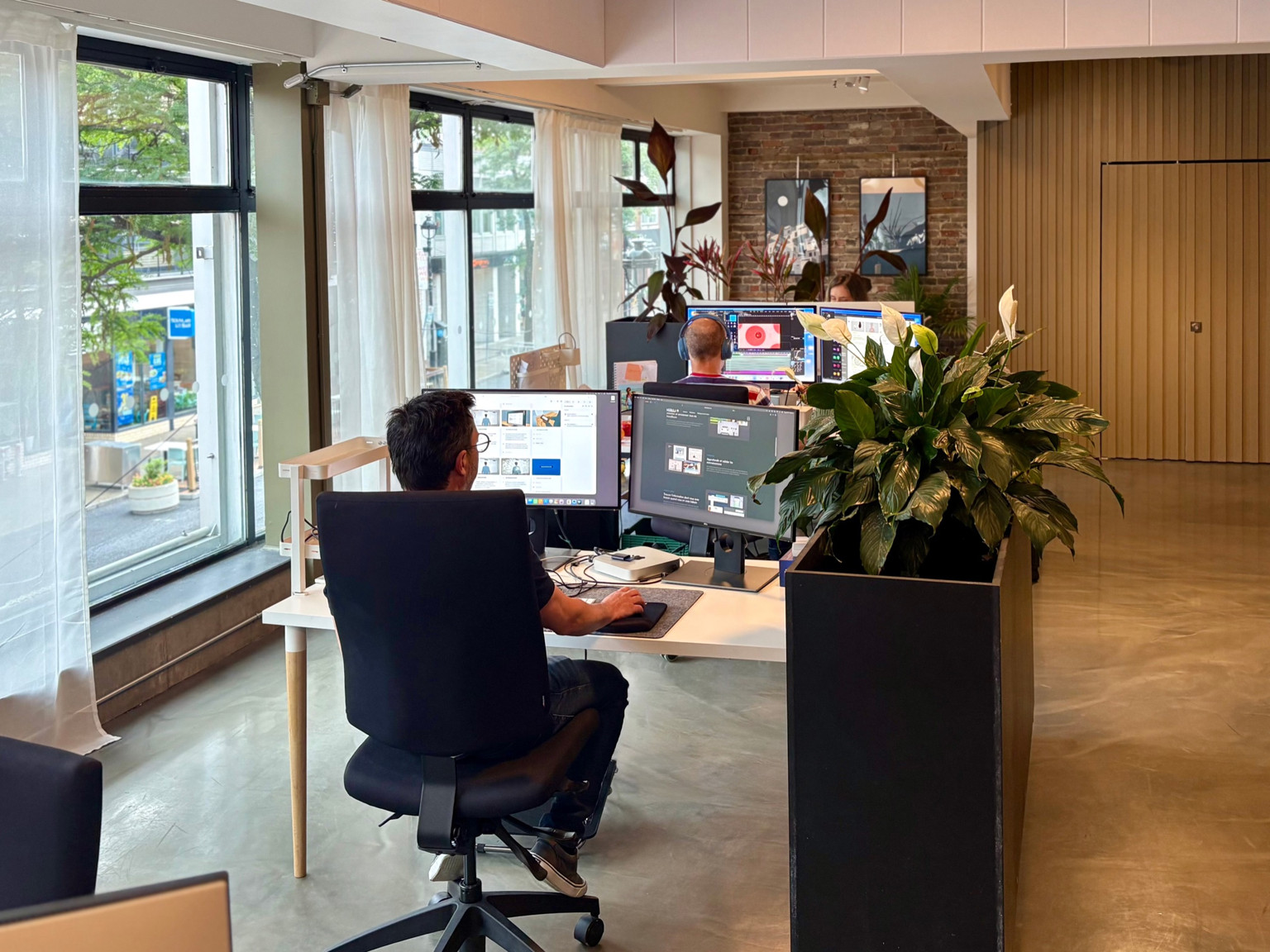
Mobula Design is a six-person studio in Montreal that mainly produces animated occupational health and safety training courses, working with freelancers and collaborators from project to project.
Training video raises the stakes on preproduction. A frame is not just a plan for a picture. It carries a pedagogical objective, a narrated script in two languages, and content a client has to stand behind legally. If the structure is wrong, the course does not teach what it must, and the studio finds out in animation, where fixes are most expensive.
So Mobula made a rule out of it. Nothing gets animated until the low-fidelity storyboard is revised, commented, corrected, and approved.
Before Boords, two production pains
Storyboards used to live on a shared network drive, and the drive set the rules. Only one person could work on a board at a time, and the sync could not be trusted.
“A storyboard might get replaced with an older one while syncing, and we would lose updates. And only one team member could work on the storyboard at a time.”
Client reviews were the second pain. Feedback came back as notes on a PDF, and someone had to manually reintegrate every comment and script change into the working board, a step where errors crept in.
“Having a solid low-fidelity storyboard is the key to avoiding redos and wasting precious time in production.”
From outline to signed-off board
Each project starts with research and a content outline. Once the content and structure of a video are established, the outline is imported into Boords, where the team validates the structure and the pedagogical objective of each frame before any drawing starts.
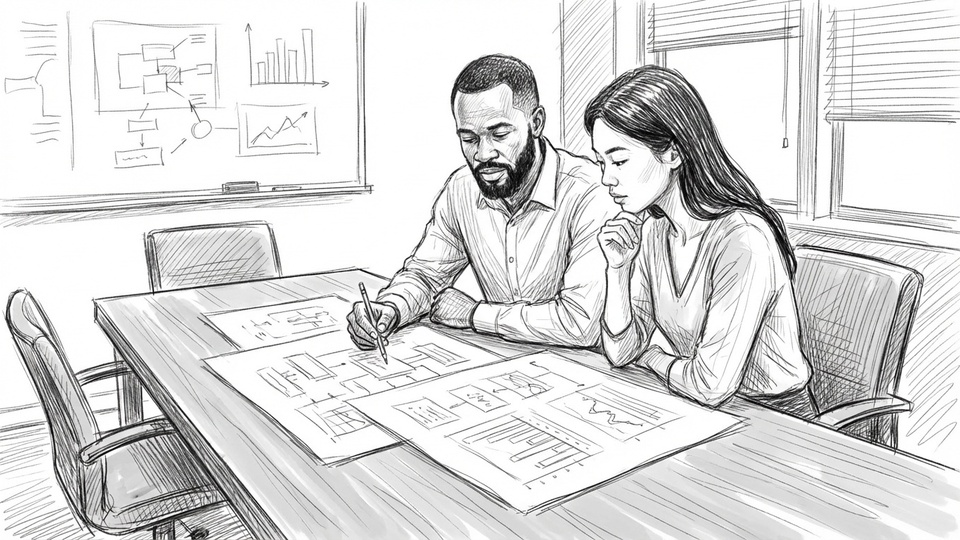
Then the narration is written, frame by frame, so the ideas flow from one to the next. An animator and a content producer pair up on each board, building the low-fidelity version together in the same project.
That low-fi board is where the arguments happen, cheaply. It gets revised, commented, and corrected before animation begins. For the first edit, Mobula cuts the video with a temporary voice-over, so clients can hear the narration and validate it before it is professionally recorded.
Reviews that stay on the record
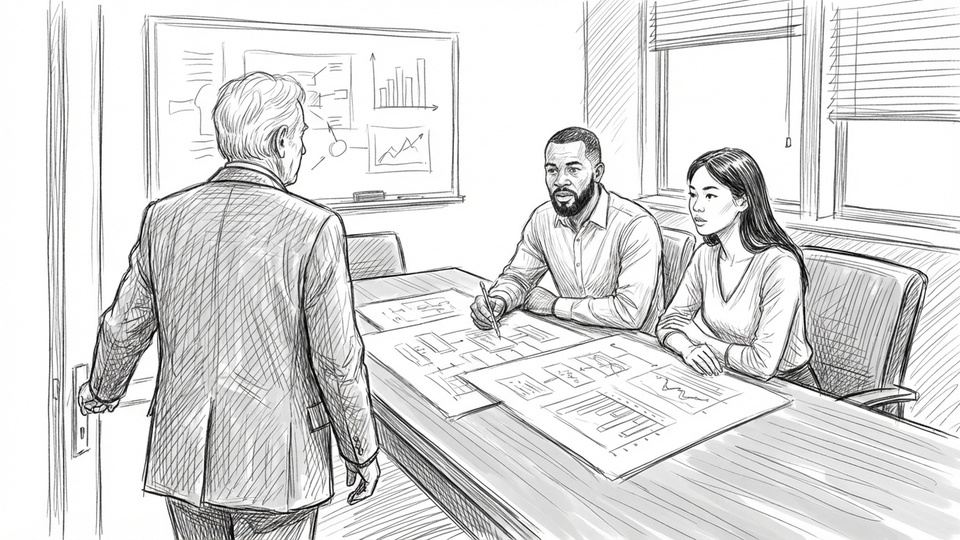
Comments do double duty at Mobula. They track client feedback, and they carry even more of the studio's internal communication, including with freelancers. Every change to the voice-over script, the animation, or the edit is logged as a comment on the frame it affects, annotated, replied to, and marked completed as the work lands.
“Because multiple team members can work in Boords at once, and because clients can add their comments directly into the storyboards, we save a lot of time and reduce the chances of errors.”
Delivery flexes to the client. Sometimes it is a share link where the client comments directly on frames. Sometimes it is an exported PDF with exactly the fields Mobula chooses to include. Often it is a video call, walking through the board together while the team logs the comments live. Whichever route a review takes, it ends the same way. The changes are applied, and a new version of the storyboard is created, so the next round starts clean.
What would hurt most
Ask the team what they would miss if Boords disappeared tomorrow, and the answer is not a feature.
“We would most miss the collaborative aspect of it, and the fact that we can keep track of comments and versions. We would miss the time saved and the workflow that we have grown accustomed to.”
That is what a pre-production platform looks like after years of daily use. Not a tool the team thinks about, but the workflow the studio runs on.
How Mobula runs a board through Boords
Import the outline
Research becomes a content outline, then goes straight into Boords, where the team validates the structure and the learning objective of every frame.
Storyboard in pairs
One animator and one content producer build each low-fidelity board together, working in the same project at the same time.
Comment on frames
Annotations, replies, and completed states track every change to script, animation, or edit, for the core team and freelancers alike.
Version every round
When a review round closes, the changes are applied and a new version is created, so the next round starts from a clean board.
Share for sign-off
Clients comment on a share link, review a PDF with hand-picked fields, or walk through the board on a call while Mobula logs the comments.
Cut with temp voice-over
The first edit uses a temporary voice-over, so clients hear and approve the narration before it is professionally recorded.
Two boards Mobula shipped to clients
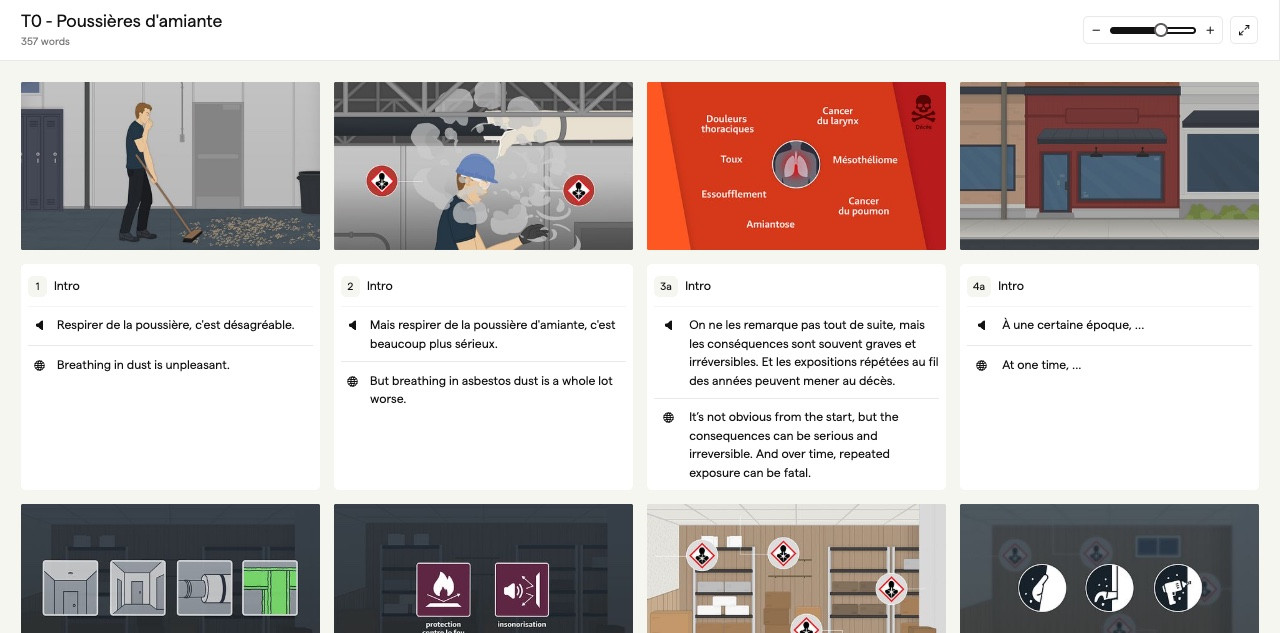
Poussières d'amiante
An occupational health and safety video on exposure to asbestos dust, made for all workplaces. A fully narrated board with the voice-over script in French and English on every frame.
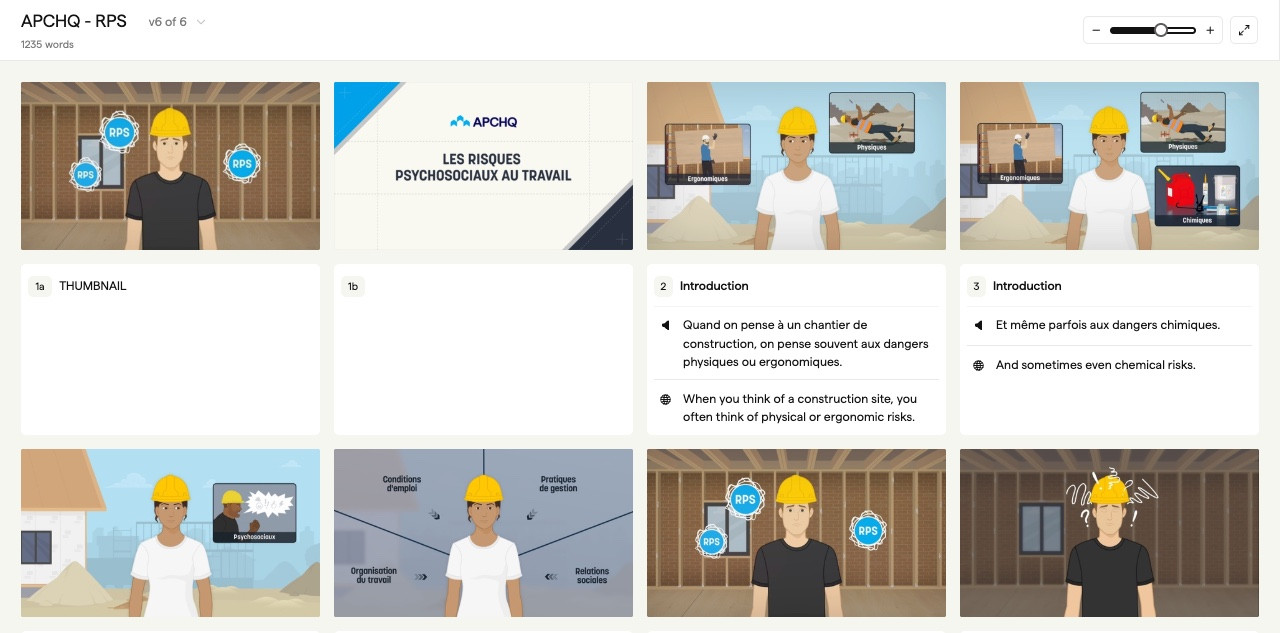
APCHQ, Les risques psychosociaux au travail
A course on psychosocial risks at work for the residential construction industry. Shown here at version 6 of 6, one version for every review round.
Get every video signed off before production starts
Create scripts, storyboards, and animatics with your team.
Collect client feedback, keep every version on record, and go into production knowing exactly what was approved.